I’ve carried a lot of stupid things in my bug-out bag over the years.
A tactical shovel I never used.
Paracord I never unraveled.
Waterproof matches that got damp anyway.
But the dumbest thing I ever tried to pack for emergencies was freeze-dried meals.
Here’s what nobody tells you about those silver pouches: they’re bulky, they’re expensive, and they need boiling water.
When you’re on foot, carrying everything you own, and every ounce matters, you realize how ridiculous it is to dedicate half your pack weight to food that requires fire and clean water to prepare.
Then I found something while researching the Lewis and Clark expedition that changed how I think about portable food entirely.
In 1803, Meriwether Lewis spent $289.50 on 193 pounds of something called “portable soup.”
That was more than he spent on weapons, ammunition, or any other single item for the entire expedition.
At $1.50 per pound, this was the most expensive item in the expedition’s inventory.
This soup literally fit in a pocket. It never spoiled. It required no refrigeration.
And it kept 33 men alive for seven straight days when they were starving in the Bitterroot Mountains with no game to hunt.
I’ve been making this stuff for two years now. It weighs almost nothing. Takes up minimal space.
And unlike modern survival food, it was designed to keep you alive when absolutely everything else has failed.

What Is Portable Soup (And Why Have You Never Heard of It)?
Portable soup was a dehydrated broth used in the 18th and 19th centuries, the original bouillon cube, but way more concentrated and shelf-stable.
The British Navy started issuing it to sailors in the 1750s.
They provided 50 pounds of portable soup for every 100 sailors on long voyages because it kept for months without refrigeration and provided calories when everything else ran out.
Explorers carried it. Military forces stockpiled it.
William Byrd II, a Virginia planter, described it as food “of very small Weight and very great Nourishment, that will secure them from Starving.”
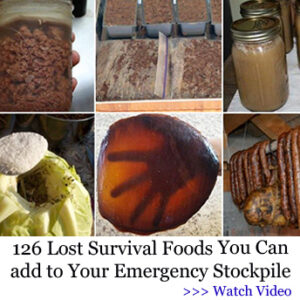
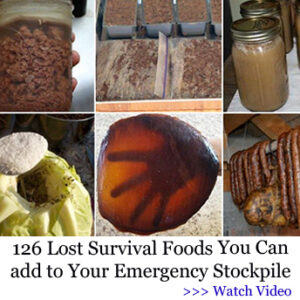
The process is simple: you make incredibly rich bone broth, reduce it repeatedly until it becomes gelatinous, then dry it completely until it solidifies into hard cakes that look like dark brown blocks of, and I’m not making this up, glue.
A cake of portable soup from Captain Cook’s supplies survives in Britain’s National Maritime Museum, looking much like a “slab of glue.”
It was tested in the 1930s and had changed very little despite being over 150 years old.
That’s the power of proper dehydration. Remove all the moisture, remove all the fat, and you’ve got something that lasts indefinitely.
The Seven Days That Proved Everything
September 14, 1805. The Lewis and Clark expedition was screwed.
They were crossing the Bitterroot Mountains in Montana, one of the most brutal sections of their entire journey.
Snow was falling. Game had disappeared. The men were starving.
Lewis made the decision to crack open the portable soup, something they’d been carrying for over 500 days without touching.
The expedition dined on portable soup for seven straight days, from September 14 to September 20, 1805.
According to the journals, they consumed massive amounts, the 33 adults consumed nearly a pound per day per person.
By September 20, only “a few” of the 32 canisters remained. They’d gone through roughly 130 pounds in six days.
Did they love it?
Hell no. Sergeant Patrick Gass noted in his journal that Captain Lewis gave out the soup “to be used in cases of necessity.”
Translation: nobody wanted to eat this stuff unless they absolutely had to.
But here’s what matters: it worked.
It kept them functional. It provided the calories and protein they needed to survive until they found food again. The portable soup served its purpose during the worst ordeal of the expedition.
That’s exactly what emergency food should do. Not taste great. Not be comfortable. Just keep you alive when nothing else will.

Why Modern Preppers Are Doing It Wrong
I spent $1,200 on freeze-dried meals before I figured out I was approaching this backwards.
Those Mountain House pouches? They weigh 4-6 ounces each and provide 400-600 calories.
To carry a week’s worth of food (14,000 calories minimum), you’re looking at 25-30 pouches weighing 7-10 pounds and filling a entire backpack section.
Portable soup? Each ration provides 231 calories contained in 36 grams of protein and 8.5 grams of fat. A week’s worth weighs maybe 3-4 pounds and fits in a cargo pocket.
But weight isn’t even the main issue. The real problem is dependency.
Freeze-dried meals require:
- Boiling water (which means fire or a stove)
- Fuel to heat that water
- A pot to boil in
- Time to wait for rehydration
- A clean water source
Portable soup requires:
- Hot water if you want soup
- Nothing if you’re desperate, you can eat it dry
As Sir Hugh Plat wrote in the late 1500s, “a soldier may satisfie his hunger herwith, whilst hee is in his march.” You can literally suck on a piece while walking and get calories without stopping.
Try that with a freeze-dried meal.
The Recipe Lewis and Clark Used
Lewis purchased 193 pounds from François Baillet, a cook in Philadelphia, stored in 32 tin canisters. We don’t know Baillet’s exact recipe, but it was probably similar to Ann Shackleford’s recipe from a 1760s London cookbook.
The basic process from historical recipes:
Start with collagen-rich meat. Beef shin, veal bones, calves’ feet, anything with lots of connective tissue that breaks down into gelatin. The recipe calls for boiling the feet or legs of beef cattle for a long time to make “a good broath.”
Boil for 6-8 hours minimum. You’re extracting every bit of gelatin and protein from the bones and meat. Portable soup was made from a slow-cooked beef or veal broth, often 6 to 8 hours.
Strain and degrease completely. The broth was reduced and degreased to remove fat which may spoil and become rancid over time. Fat is the enemy of long-term storage.
Reduce repeatedly. The broth is boiled down to “a strong & stiff gelly,” then reduced again until it solidifies. You’re concentrating everything down to pure protein and gelatin.
Dry until hard. The jelly was dried on clean cloths in a windy place out of the sun, cut into pieces, and stored in wooden boxes. Complete desiccation is critical.
The end result looks like dark brown glass or rubber. When tested, the dehydrated product is about 61 percent water, much drier than modern condensed soups.

My Simplified Modern Version
I’ve made this dozens of times now. The historical recipes work, but they’re labor-intensive and written for people with all day to tend a fire.
Here’s my streamlined version that uses a slow cooker and requires minimal attention.
What you need:
- 10-12 pounds of beef shin, neck bones, or oxtail (high in collagen)
- Water
- Slow cooker (6-8 quart minimum)
- Strainer and cheesecloth
- Shallow pans for drying
- Patience
The process:
Day 1 – Make the broth: Place bones and meat in slow cooker. Fill with water to within an inch of the top. Cook on low for 16-24 hours. The longer, the better, you want bones that crumble when squeezed.
Day 1 evening – First strain: Pull out all solids. The meat can be used for other dishes, but it’ll be pretty flavorless. Discard the bones. Strain the liquid through cheesecloth into a large pot or bowl.
Day 1 night – Degrease: Refrigerate the strained broth overnight. The fat will solidify on top, making it easy to remove. In the morning, scrape off every bit of fat you can. This step is crucial, any remaining fat will go rancid and ruin your portable soup.
Day 2 – Reduce: Pour the degreased broth back into your slow cooker. Cook on low with the lid OFF for 12-24 hours. You’re evaporating water and concentrating the broth. It’s done when it’s thick and syrupy, when cooled, it should be firm gelatin that jiggles but holds its shape.
Day 2-3 – Dry: Pour the reduced broth onto parchment paper in shallow pans, about 1/4 inch thick. Place in a well-ventilated area away from direct sunlight. Use a fan to speed drying. This takes 3-7 days depending on humidity. The soup is ready when it’s completely hard and dry to the touch, like hard rubber or leather.
Storage: Cut into small squares. Store in airtight containers with desiccant packets. Will last years if kept dry and cool.
Critical mistakes I made learning this:
Adding salt during cooking: Don’t. Salt concentrates as you reduce and will make the final product inedibly salty. Season when you reconstitute it.
Not degreasing thoroughly: Even a little fat will go rancid. I ruined my first three batches by being lazy about fat removal.
Trying to speed up drying: I put a batch in a low oven to dry faster. It melted into a sticky mess. Room temperature drying only.
Using fatty cuts: Lean meat with lots of connective tissue is what you want. Marbled cuts don’t work well.
What It Actually Tastes Like
Let me be honest with you. This isn’t gourmet food.
The original expedition members weren’t fans. Historical accounts describe it as having a paint-like smell and wood-like taste.
One comparison said it tasted like Ritz crackers that had been left in a hot car for eight years.
My version tastes like extremely concentrated, unseasoned beef broth. It’s not offensive, but it’s not pleasant either. It’s food. That’s it.
When reconstituted with hot water (about 1:1 ratio of soup to water), you get a rich broth that desperately needs salt and seasoning. Add vegetables, herbs, literally anything, and it becomes a decent soup base.
Eaten dry in an emergency? It tastes like you’re chewing on a bouillon cube. Salty, intensely beefy, kind of medicinal. But it provides quick calories and won’t kill you.
This is survival food designed for the worst-case scenario.
If you want something tasty, make regular soup. If you want something that’ll keep you alive when you’re out of options, make portable soup.
The Math: Weight vs. Calories
This is where portable soup becomes interesting for anyone serious about bug-out bags or weight-limited scenarios.
Each ration of portable soup provides 231 calories in about 125 grams (4.4 ounces) when dehydrated.
Starting with 10 pounds of beef shin and bones, after the full process, you’ll get roughly 12-16 ounces of finished portable soup. That’s a 90% reduction in weight.
Those 12-16 ounces provide approximately 2,000-2,800 calories, roughly a day’s worth of energy.
Compare that to carrying 10 pounds of meat through the wilderness. No comparison.
For my bug-out bag, I carry about 2 pounds of portable soup divided into small bags.
That’s roughly 3,500-4,000 calories that takes up almost no space and requires zero refrigeration.
Add some rice or crackers and I’ve got a week of calories in under 4 pounds.
The expedition carried 193 pounds for 33 men. That would have provided about 700 rations, or roughly 21 rations per person.
Each man had about three weeks of emergency calories in portable soup form, concentrated into something that could be carried alongside everything else they needed.
That’s brilliant logistics for 1803. It’s still brilliant logistics today.
Storage and Shelf Life: The Real Advantage
Freeze-dried meals claim 25-30 year shelf life. In practice, taste and nutrition degrade after 10-15 years even in perfect storage.
Portable soup? A cake from Captain Cook’s 1768 expedition survived 150+ years and was tested in the 1930s with minimal change.
The key is moisture content and fat removal. Water and fat are what cause food to spoil. Remove both completely, and you’ve got something that lasts indefinitely in the right conditions.
I’ve been storing mine in vacuum-sealed bags with desiccant packets in a cool, dark closet. After two years, it looks and performs identically to fresh batches.
My storage protocol:
Cut into 1-2 ounce pieces after drying. Vacuum seal in portions with oxygen absorbers.
Store in a cool, dark, dry location. Check annually for any signs of moisture or degradation. Rotate if you want, but honestly, I don’t think it’s necessary.
As Sir Hugh Plat wrote in the 1500s, made in March, it would “keepe all the yeere.” That was the minimum expectation.
Modern preppers have found portable soup that’s 5-10 years old still perfectly usable.
The British Navy used it for decades precisely because it didn’t spoil on long voyages.
Ships would carry it for months in tropical heat, through storms, in damp conditions that ruined almost everything else, and the portable soup remained edible.
When You’d Actually Use This
I’m not suggesting you eat portable soup daily. I’m suggesting you make it once, store it properly, and forget about it until you absolutely need it.
Scenarios where portable soup makes sense:
Bug-out situations: Every ounce matters when you’re carrying everything on your back. Portable soup provides maximum calories in minimum weight and space.
Vehicle emergency kits: Temperature extremes in cars destroy most food. Portable soup handles heat and cold without degradation.
Extended hiking/backpacking: Ultralight backpackers are always looking for calorie-dense foods that weigh nothing. This fits perfectly.
Disaster scenarios: When you can’t cook or boil water, you can still get calories by eating it dry.
Economic collapse/Depression scenarios: If you need to stretch limited meat resources, this lets you preserve and concentrate meat into a form that lasts years.
Trading/bartering: In a long-term collapse, concentrated protein with indefinite shelf life becomes valuable currency.
Scenarios where you probably don’t need it:
Daily meal prep: Just make regular soup. Seriously.
Short-term power outages: You’ve got better options that taste better.
Camping trips where weight doesn’t matter: Bring fresh food and enjoy yourself.
The power of portable soup isn’t in everyday use. It’s in having an option when all your other options fail. It’s the food you hope you never need but are damn glad you have when you do.
The Historical Context Nobody Talks About
By 1815, portable soup’s effectiveness for preventing scurvy was found lacking, and opinion shifted toward canned meats.
The British Navy eventually stopped using it.
But here’s the thing, they were wrong to abandon it completely.
Portable soup was never meant to be a complete diet. It was meant to supplement other foods and provide emergency calories when nothing else was available.
The Navy’s mistake was expecting it to do something it was never designed for, prevent scurvy caused by lack of vitamin C.
For its actual purpose, concentrated, shelf-stable protein that keeps you alive during emergencies, it’s damn near perfect.
The real reason it fell out of use wasn’t that it didn’t work. It’s that canning technology made it easier to preserve complete meals.
Then refrigeration made everything else obsolete. We traded simplicity and longevity for convenience and variety.
Most people today have never heard of portable soup because we haven’t needed it. We’ve got refrigerators, freezers, grocery stores on every corner. The skills our great-great-grandparents took for granted have disappeared in just a few generations.
But those skills remain useful. Maybe more useful now than ever, given how fragile our supply chains proved to be during recent crises.
The Testing Protocol You Actually Need
Building a prep system you never test is building a fantasy.
Here’s how I actually test portable soup to make sure it works when I need it.
Test 1 – Taste and palatability: Every batch I make, I reconstitute a piece immediately. Add hot water, season with salt and pepper, taste it. If it’s awful, I figure out what went wrong. Most problems trace to over-salting during reduction or incomplete degreasing.
Test 2 – Weight carry: Put a week’s worth in my pack with normal gear. Hike 10 miles. Assess whether the weight and bulk are manageable. Portable soup always passes this test easily.
Test 3 – Field use: Take it on actual camping trips. Use it for one meal per day. See how it performs in real conditions, can I actually reconstitute it with creek water heated over a fire?
Does it provide enough calories to keep me functional? How’s my energy level after eating it?
Test 4 – Storage stability: I keep test pieces in various conditions, one in my hot garage, one in a cool basement, one vacuum sealed, one just in a ziplock. Check them every six months. So far, proper vacuum sealing wins. The garage storage shows some degradation after a year.
Test 5 – Emergency simulation: Twice a year, I do a weekend where I eat only portable soup and water. This sucks, but it tells me exactly what to expect in a real emergency. Energy levels stay stable. I lose about 2-3 pounds by Sunday. Hunger is constant but manageable. Mental clarity remains good.
The last test is important because it removes any illusions. Portable soup will not make you comfortable. It will not satisfy you. But it will absolutely keep you functional, which is the only metric that matters in a real emergency.
Making This Actually Work For You
Here’s my recommendation if you want to add portable soup to your preps.
Start small: Make one batch using 5 pounds of bones instead of 10. See if you can handle the process and whether the result is something you’d actually use.
Test it before crisis: Don’t wait for an emergency to figure out if your portable soup works. Make it, test it, and refine your recipe now.
Don’t rely on it exclusively: Portable soup is one tool in a larger food security strategy.
I’ve got freeze-dried meals, rice, beans, canned goods, and portable soup. Different tools for different scenarios.
Focus on your weakest prep area: If you’ve got a year of food at home but nothing for your bug-out bag, portable soup fills that gap perfectly. If you’re loaded for weight-limited scenarios but lack home storage, focus elsewhere.
Calculate realistic amounts: Don’t make 50 pounds of something you’ll never use. Make enough for genuine emergencies, maybe 5-10 pounds total split across vehicle kits, bug-out bags, and home storage.
The beauty of portable soup is that once made and stored properly, it requires zero maintenance. I check my vacuum-sealed bags annually to ensure the seal is intact. That’s it. No rotation schedule, no worrying about expiration dates, no testing freeze-dried meal pouches to see if they’re still edible.
Make it once, store it right, forget about it until you need it.
What the Expedition Taught Us About Survival Food
Lewis considered portable soup “one of the most essential articles” for the expedition.
He was willing to spend more money on it than any other single item.
Why?
Because he understood something most modern preppers miss: the best survival food isn’t the one that tastes best or provides the most comfort.
It’s the one that works when absolutely everything else has failed.
The expedition had multiple food strategies. They hunted (when game was available). They traded with Native Americans (when they encountered tribes). They carried dried corn and beans and other staples.
But portable soup was their last resort, the food that came out only when they were genuinely desperate. And in that role, it was perfect.
That’s how you should think about it too.
Not as your primary food source. Not as something you’d want to eat regularly.
As insurance against the worst-case scenario.
Lewis and Clark had portable soup left over even after the Bitterroot Mountains, using some to treat a sick Nez Perce chief in May 1806. It kept working throughout the entire expedition and beyond.
Two years, thousands of miles, every imaginable weather condition, and the portable soup remained edible and effective.
That’s the standard your emergency food should meet.

Stop Overpaying For Inferior Options
I spent over $1,200 on commercial survival food before I figured this out. That money bought me maybe six months of calories, most of which I had to rotate because freeze-dried meals don’t actually last as long as advertised once opened.
Making portable soup costs about $40-60 in raw materials for 12-16 ounces of finished product.
That’s roughly 2,500-3,500 calories for $50.
Yes, it takes time, about 3-4 days of mostly passive work where the slow cooker and time do the heavy lifting.
But for anyone serious about weight-limited emergency food, the return on investment is massive.
The expedition spent $289.50 in 1803 dollars on 193 pounds.
Lewis had estimated it would cost about one dollar, but it ended up at $1.50 per pound.
Even then, it was considered worth the premium price because nothing else offered the same combination of nutrition, weight, and shelf life.
Compare that to modern freeze-dried meals at $8-15 per serving. You’re paying for convenience, packaging, and marketing. The actual food value is debatable.
I’m not saying freeze-dried meals are worthless. I own some. But I’m saying don’t make them your only option, and definitely don’t build your entire food security strategy around something that requires boiling water and perfect storage conditions.
Build It This Weekend
Look, portable soup isn’t sexy. It won’t impress anyone at the range or in prepper forums.
You can’t post Instagram photos of your portable soup collection and get likes.
But it works. It’s worked for over 400 years, across countless expeditions, wars, famines, and disasters.
It kept the Lewis and Clark expedition alive during the worst conditions they faced.
And it’ll do the same for you if you need it.
This weekend:
Buy 10 pounds of beef shin or neck bones. Put them in a slow cooker tonight. Let it run overnight and all day tomorrow.
Strain, degrease, reduce, and start drying. By next week, you’ll have legitimate emergency food that weighs almost nothing, lasts indefinitely, and costs a fraction of commercial options.
Or you can spend another $200 on freeze-dried meals that’ll sit in your closet taking up space while you pray you never actually have to carry them anywhere.
The choice is obvious if you’re serious about preparedness instead of just collecting gear.
The best time to make portable soup was two years ago. The second-best time is today.
Get started.
I truly admire your passion Zach, you find , learn and teach so many methods to create the most effective survival strategy.
I’ve learned so much from you and I continue to do so. I thought I know enough about survival, but I keep learning new things from your teachings.
You have my deep appreciation, thank you.